Smooth AI: Turn Leads into Pipeline 24/7 with AI
Smooth AI
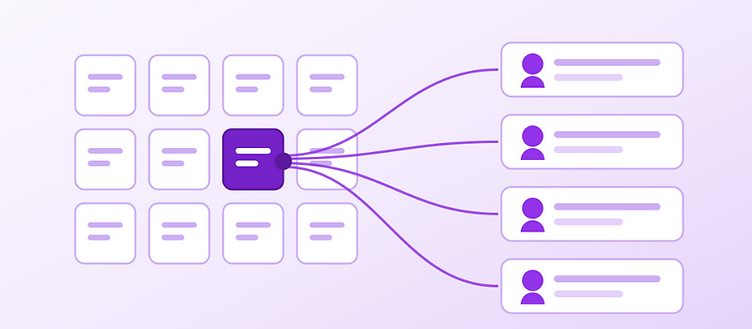
is a Revenue Intelligence Platform with a face. Create and deploy humanlike interactive avatars —
Digital Reps
— trained to engage and convert B2B buyers in real time on websites and branded landing pages, answer their questions, and turn every conversation into pipeline intelligence for your revenue team.
The AI SDR that talks to your inbound leads 24/7, books meetings, and writes them straight back to HubSpot with Revenue Intelligence. No demo, no rep, start free. Free 30-minute role-play 7-day trial. No credit card required.
The Problem: Friction is costing you revenue
Buyers want answers now, not a calendar invite three days out. Every moment of latency is a deal that drifts to a competitor who showed up first.
-
70% — Buyers go it alone.
B2B buyers are nearly 70% through their purchasing process before engaging a seller. (Source: 6sense Buyer Experience Report)
-
67% — Rep-free preferred.
67% of B2B buyers prefer a rep-free sales experience for at least part of their purchase. (Source: Gartner B2B Buying Report)
-
84% — AI is trusted.
84% of buyers trust or strongly trust the accuracy of AI-powered solutions. (Source: G2 Buyer Behavior Report)
The Solution: Intelligent conversational Digital Reps that create smooth buying experiences
Create, train, deploy, and convert — a self-service flow built for revenue teams to go from idea to a live Digital Rep engaging and converting buyers 24/7.
-
01 — Create your Digital Rep:
Brand your Digital Rep and equip it with complete knowledge of your products and services. Select from various pre-built avatars, choose a name, voice & behavior style, assign a role and provide instructions.
-
02 — Train your Digital Rep:
Train your Digital Rep on your content to make it a go-to specialist for your prospects. Upload content to train your Digital Rep, role play to test, fine-tune & validate Rep responses, refine prompts, instructions & knowledge base.
-
03 — Deploy your Digital Rep:
Deployment options tailored to your Go-to-Market (GTM) strategy and sales pipeline campaigns. Deploy GTM-focused Reps on custom-branded landing pages, embed a Rep on your website in chat or iFrame mode, align with inbound, outbound, event, partner & all GTM motions.
-
04 — Convert more leads:
Your Digital Rep engages and converts more leads on branded landing pages and your website. Digital Rep proactively greets and engages inbound leads, answers questions and dynamically presents relevant content, books meetings (sales-led) or closes deals (product-led) or both (hybrid).
The Platform: One platform. Three layers of intelligence.
Start with Conversation Intelligence. Grow to Buyer Intelligence. Scale to Sales Intelligence to evolve to a complete Revenue Intelligence Platform.
-
Conversation Intelligence (Pro):
See exactly how leads engage. Gain full visibility into Digital Rep conversations with leads by viewing full transcripts, video replays, conversation summaries. Total Sessions, Conversion Rate, Median Duration & Median Messages. Top Questions and Top Objections insights. Recent Sessions with full conversation details.
-
Buyer Intelligence (Growth):
Understand buyer journeys and intent. Unlock engagement signals and conversation data as you scale. Know what buyers care about, what they skip, and what makes them convert. High Intent Buyers: On Fire, Hot and Total Tracked visitor segments. Buyer Journey Funnel to track buyers across five stages. Buyer Archetypes identified from analyzed Digital Rep conversations.
-
Sales Intelligence (Scale):
Turn conversations into pipeline. At its highest level, Smooth AI becomes a full-scale Revenue Intelligence Platform, where conversations drive real, forecastable pipeline. Pipeline from conversation data. Forecasting from buyer signals. GTM-wide intelligence layer.
Join early adopters leveraging Smooth AI to increase speed-to-lead, conversion rates & revenue growth: BEE EFFICIENT, Curantis Solutions, Rocket, The Backyard, US-Analytics.
Key Products
A GTM-focused humanlike interactive avatar trained on your content to engage leads with dynamic buyer conversations that drive conversions. The flow: Create, Train, Deploy, Convert.
-
Create
— Brand your Digital Rep with a humanlike avatar, name, voice, behavior style and sales methodology playbook (SPIN, Sandler, MEDDIC, & more). Assign a role and give it instructions.
-
Train
— Build an organized knowledge library from documents, links, presentations, and videos. Enable dynamic knowledge retrieval during live conversations. Role-play to test & validate Rep responses.
-
Deploy
— Launch Digital Reps within branded landing pages, embedded iframe experiences, or chat mode on your website. Align with inbound, outbound, event & partner motions. Match persona and methodology to each audience.
-
Convert
— Your Digital Rep proactively greets leads, answers questions, presents content, books meetings, and triggers automated follow-up workflows. Always on — engaging and converting around the clock.
Outcomes: Always available 24/7. Humanlike avatar experience. Trained on your content — knows your product, pricing, and use cases cold.
Try Sophie, our Digital Rep, in a live interactive demo. Interact with a humanlike AI avatar in real time to see how Smooth AI engages buyers, answers questions, and books meetings.
Move beyond static forms and landing pages. Your Digital Rep automates conversations, executes conversion actions inline, and deploys across every GTM motion so no buyer waits and no opportunity slips away.
-
Conversation Automation
— Your Digital Rep engages every visitor the moment they arrive, answering questions about your product, pricing, and use cases in real time. No forms, no waiting, no friction. Real-time responses, dynamic knowledge retrieval, available 24/7 across every page and campaign surface.
-
Conversion Engine
— Move buyers through your funnel without ever leaving the conversation. Present slides, share content, book meetings, trigger follow-up workflows, and drive every conversion action inline. Branded recap emails with next-step CTAs delivered automatically.
-
GTM Campaign Execution
— Launch Digital Reps as branded landing pages, embedded experiences, or chat widgets tailored to every go-to-market motion. From inbound and outbound to ABM and events, each campaign gets a rep trained and aligned to its specific audience and goals.
Outcomes: Speed-to-lead instant. Conversion rate increase. Form friction zero — conversations replace static forms entirely.
Unlock Buyer Intelligence as you scale engagement. Know what buyers care about, what they skip, and what makes them convert, all from the conversations your Digital Reps run every day.
-
Buyer Intent Scoring
— Identify which visitors are showing strong buying signals during AI sales conversations. Prioritize follow-up based on intent instead of raw chat volume. Real-time intent signals, separate casual engagement from ready buyers, surface high-intent buyers before they go cold.
-
Conversation Intelligence
— Capture and organize what buyers actually say across every Digital Rep conversation. Review transcripts, replay sessions, and track intent progression. Session replay with transcript and visitor context, common questions and objections surfaced automatically.
-
Buyer Intelligence Dashboard
— Surface high-intent buyers, buyer journey stage movement, and buyer archetype patterns so teams know what matters before a human rep follows up. Buyer journey stage movement tracking, buyer archetype pattern recognition, turn conversation data into sharper segmentation.
Outcomes: Speed-to-lead instant. Conversion rate +38% — more booked meetings from the same traffic. 75% of B2B buyers prefer a rep-free experience.
At its highest level, Smooth AI becomes a full-scale Revenue Intelligence Platform, where every conversation drives real, forecastable pipeline and your best sellers scale infinitely.
-
Sales Analytics Dashboard
— Analyze CTA performance, methodology-stage progress, sales signals, pipeline intelligence, and per-rep performance across campaigns and buying journeys.
-
Executive Performance Dashboard
— Track total sessions, conversion rate, conversation depth, common questions, and common objections. Connect website conversations to measurable sales outcomes.
-
Workflow Automation
— Automatically send session summaries when conversations match selected follow-up conditions. Trigger workflows using intent category, conversion outcome, buyer journey stage, and more.
-
HubSpot CRM Sync
— Sync contacts, companies, deals, and conversation data into HubSpot. Reduce manual handoff work and keep CRM records connected to context captured during the conversation.
-
White-Label Experience
— Present Smooth AI with customer-specific app naming, logos, and styling. Support partners and enterprise customers that need the product to feel native to their own brand.
-
Branded Communication Suite
— Send polished visitor-facing recap emails with the right rep name, logo, recap content, and next-step CTAs. Keep follow-up visually consistent and connected to the same branded sales experience.
Every Digital Rep conversation generates rich buyer data. Conversation Intelligence, Buyer Intelligence, and Sales Intelligence work together to turn that data into pipeline, forecasting, and measurable revenue outcomes.
-
Conversation Intelligence
— See exactly how leads engage. Session replay with full transcript and visitor context. Track common questions, objections, and engagement depth. Intent progression and conversion activity tracking. Surface what buyers care about and what they skip.
-
Buyer Intelligence
— Understand buyer journeys and intent. Real-time intent signals from every conversation. Buyer journey stage movement tracking. Buyer archetype pattern recognition. Separate casual engagement from ready buyers.
-
Sales Intelligence
— Turn conversations into pipeline. Sales analytics dashboard with pipeline intelligence. HubSpot CRM sync for contacts, companies, and deals. Workflow automation triggered by conversation outcomes. Executive performance dashboards for revenue leaders.
Outcomes: Pipeline visibility 100% — every conversation connected to revenue. Follow-up speed real-time — workflows trigger the moment intent is detected. CRM coverage full — contacts, companies, and deals synced automatically.
Solutions
By Role
-
For Founders
— Be everywhere at once. Your Digital Rep engages every visitor, answers every question, and books meetings while you focus on building the product, closing investors, and leading the team. Pains: You can't be on every sales call yourself; inbound leads slip while you're heads-down building; no consistent way to tell your story to every buyer. Wins: Be present on every buyer conversation, 24/7; tell your story consistently, on-brand, every time; focus on building while your Rep builds pipeline.
-
For Chief Revenue Officers
— Own every revenue surface. Standardize how your team engages buyers, see exactly what's driving pipeline, and forecast with confidence using real conversation data. Pains: No visibility into what buyers actually want; inconsistent engagement across the GTM team; forecasting built on guesswork, not signal. Wins: One intelligence layer across every surface; consistent, on-brand conversations at scale; pipeline visibility from real buyer signals.
-
For Sales Leaders
— Give your team a tireless Digital Rep that engages every inbound lead the moment they arrive, so deals stop slipping through the cracks and pipeline keeps flowing 24/7. Pains: Leads go cold before a rep responds; inconsistent coverage across time zones; no visibility into what buyers actually want. Wins: Instant speed-to-lead on every surface; consistent, on-brand conversations at scale; pipeline visibility from real buyer signals.
-
For Marketing Leaders
— Turn every landing page into a conversation. Capture intent the moment it appears, route qualified buyers to sales, and prove exactly which campaigns drive real pipeline. Pains: Landing page traffic bounces before converting; no signal on which content drives intent; lead quality handed to sales is a mystery. Wins: Convert page bounces into conversations; see content-level engagement signals; hand sales warm, intent-rich leads.
-
For RevOps
— Bring every GTM surface into one intelligence layer. Standardize conversations, capture clean data, and route the right buyers to the right rep automatically. Pains: Fragmented tools and broken handoffs; dirty, incomplete pipeline data; manual lead routing that's never right. Wins: One intelligence layer across surfaces; clean conversation data captured automatically; automated, rules-based lead routing.
-
For Account Executives & SDRs
— Focus on the conversations that move pipeline. Your Digital Rep engages inbound leads instantly, qualifies, answers, and books, so AEs walk into pre-warmed meetings and SDRs spend time on real conversations, not cold lists. Pains: Time lost to repetitive discovery & qualification; leads go cold before a rep responds; endless cold outreach with low response; buyers bouncing before they reach a human. Wins: Walk into pre-qualified, warm meetings; engage inbound instantly, 24/7; automated, timely follow-up on every deal; spend time on conversations that actually move pipeline.
By Use Case
-
Inbound
— Win the inbound moment. Every inbound lead gets a humanlike Rep the second they land, answering questions, presenting content, and booking the meeting before they ever bounce. Pains: Inbound leads wait hours for a response; most visitors leave without a conversation; no way to engage after hours. Wins: Instant engagement, 24/7; convert bounces into booked meetings; consistent coverage across time zones.
-
Outbound
— Make outbound personal. Deploy Digital Reps on outbound campaign landing pages so every click from your outreach lands in a tailored, conversational experience, not a static form. Pains: Outbound clicks land on static pages; personalization stops at the email; no continuity between email and page. Wins: Tailored conversations per campaign; continuity from email to landing page; higher conversion from outbound spend.
-
Events
— Make every event count. Turn your event traffic into conversations. Deploy a Digital Rep on event landing pages and follow-up sequences so every registrant gets engaged, qualified, and routed while you focus on the room. Pains: Event leads go cold before follow-up; no way to engage registrants instantly; post-event outreach is manual and inconsistent. Wins: Engage registrants the moment they sign up; qualify and route event leads automatically; consistent, on-brand follow-up after every event.
-
Partners
— Turn partners into pipeline engines. Give every partner a co-branded Digital Rep that engages their referrals instantly, so partner-sourced leads get the same speed-to-lead and qualification as your own inbound. Pains: Partner-sourced leads slip through the cracks; no consistent experience for referral traffic; hard to track partner-driven engagement. Wins: Co-branded Reps for every partner; instant engagement on partner referrals; clear visibility into partner pipeline.
-
ABM
— Account-based, at scale. Give every target account a dedicated, account-aware Digital Rep, delivering a personalized buying experience to each stakeholder simultaneously. Pains: Personalization doesn't scale to many accounts; each stakeholder needs a different message; manual ABM is slow and expensive. Wins: Account-aware Reps per target; personalized per stakeholder, at scale; real engagement data per account.
-
Website Engagement
— Your website, but alive. Embed a Digital Rep across your site in many modes, proactively greeting visitors, answering questions, and turning passive browsing into active pipeline. Pains: Website visitors browse and leave; no way to engage anonymous traffic; static content can't answer questions. Wins: Proactive engagement on every page; turn anonymous traffic into conversations; answers and content in real time.
Pricing
Plans start with a free 7-day trial — 30 talk minutes, a guided 30-minute session, no credit card required. All plans include the Core Platform (Digital Rep builder, knowledge base, website embeds, branded landing pages, core analytics).
-
Pro — $150/mo
($1,500/yr). 500 talk minutes/mo, 3 team members. For launching your first AI sales motion. Email support.
-
Growth — $500/mo
($5,000/yr). 1,500 talk minutes/mo, 5 team members. Adds Buyer Intelligence (intent scoring, buyer archetypes, journey tracking, high-intent feed) and HubSpot CRM integration. Most popular. Priority support.
-
Scale — $1,750/mo
($17,500/yr). 4,500 talk minutes/mo, 10 team members. Adds full Sales Intelligence (Sales Analytics, CTA performance, methodology funnels, pipeline intelligence, per-rep breakdown) and workflow automation. Dedicated CSM.
Overage rates: $0.45/min (Pro), $0.40/min (Growth), $0.35/min (Scale). Minute pack add-ons: $0.35 / $0.30 / $0.25 per minute. Extra Digital Rep: $50/mo. Extra team member: $25/mo. Annual billing saves 2 months free.
See full pricing and feature comparison
.
Resources
Blog
— thought leadership on AI-powered selling (
see all
):
By Sean Piket, Founder & CEO, Smooth AI · August 2026 · 7 min read
How humanlike Digital Reps compress speed-to-lead from hours to instant, without losing the human touch. Most B2B companies have not automated the top of their funnel. They have automated the waiting at the top of their funnel. A buyer lands on your pricing page at 9:40pm on a Tuesday night. They are interested enough to be there, and curious enough to want three or four specific questions answered. What do you offer them? A form. We have built extraordinarily sophisticated machinery for processing a lead after the moment of interest has passed. The moment itself — the ten minutes when a buyer is actually paying attention — is almost entirely unattended.
The top of funnel is a queue problem.
A form is a ticketing system. It converts a live human being with momentum into a database row waiting for a human to become available. 6sense research puts B2B buyers at nearly 70% of the way through their purchasing process before they engage a seller. Gartner's 2026 sales survey found that 67% of B2B buyers now prefer a rep-free experience for at least part of their purchase, and that 45% used AI tools during a recent purchase.
Automation as deflection vs. automation as engagement.
Automation as deflection is what the last decade of chatbots delivered — its goal is containment. Automation as engagement has the opposite goal — it exists to give the buyer more access, not less. A Digital Rep is the second thing: an extension of your sales team that happens to be available at all times, on every page, in every campaign, simultaneously.
Three buyers, one form.
Buyers arrive at three completely different levels of readiness — just getting started (needs orientation), ready to evaluate (needs proof), and ready to buy (needs a fast path) — and the form-first funnel processes all three identically. A Digital Rep does not need to guess which of the three it is talking to, because it can simply have the conversation and find out.
"Without losing the human touch" is a design requirement.
Answer before you ask. One question at a time. Be transparent by default. Know the edge of your knowledge. Let the buyer set the pace. In Smooth AI these are enforced at the platform level: every Digital Rep ships with a non-editable System State grounded in Buyer-Led Growth and Frictionless Selling principles.
What to measure:
Engagement rate, time to first substantive answer, conversation-to-conversion rate, qualified handoff quality, and question and objection intelligence. The top of the funnel is the largest, least-observed conversation surface your company has.
Start narrow.
Begin with one surface where interest is highest and coverage is worst — usually the pricing page or a live campaign landing page — and deploy one Digital Rep there. Two weeks of that produces more usable insight about your funnel than a quarter of dashboard review.
By Sean Piket, Founder & CEO, Smooth AI · August 2026 · 6 min read
What the latest Gartner B2B buying research means for how you engage buyers in 2026 — and why the number everyone quotes is the wrong one. The widely circulated 75% figure traces back to Gartner research from 2019, scoped specifically to low-complexity purchases. The current number: in a Gartner survey of 646 B2B buyers conducted in late 2025 and published in March 2026, 67% said they prefer a rep-free experience for at least part of their purchase. Buyers are not saying they never want to speak to a human. They are saying there are large stretches of the buying process where a human is an obstacle rather than a help.
Rep-free is not help-free.
Buyers still want contextual intelligence — help determining whether a product genuinely fits their business, help building internal consensus, help getting to confidence. What they don't want is to schedule a call, wait four days, and sit through a discovery script. The preference is not really about reps. It is about friction and latency.
The AI half of the finding.
45% of buyers used AI tools during a recent purchase. A buyer in 2026 opens an AI assistant and asks it to compare you against two competitors, summarise your security posture, and estimate your implementation timeline. Your buyers are already having an AI-mediated conversation about your product. The only open question is whether your company is in the room.
Confidence is the real conversion metric.
Buyers who reach decision confidence are roughly twice as likely to report a high-quality deal as buyers with low confidence. Every unanswered question is a small unresolved risk the buyer carries into their internal conversation, and internal conversations are where deals quietly die.
What to actually do:
1. Publish what you have been gating. 2. Put a knowledgeable conversation on every high-intent surface. 3. Stop qualifying before you help. 4. Reserve human time for contextual judgement. 5. Instrument the conversations. "Rep-free" describes a preference about process, not about people. Buyers are not asking you to disappear. They are asking you to be available on their schedule, honest by default, and useful before you are commercial.
By Sean Piket, Founder & CEO, Smooth AI · July 2026 · 7 min read
The maturity map from one Digital Rep on one landing page to a full-scale revenue intelligence platform — and why most teams try to start at the top. Your company has thousands of conversations with buyers every year. Almost none of them produce data you can act on. A Revenue Intelligence layer is the answer, and it accumulates in a specific order through five cumulative stages.
Layer 1 — Conversation Automation:
Start where the loss is largest: interested visitors who leave without engaging. A single Digital Rep, trained on your website and product documentation, deployed on one high-intent surface. Buyers get answers at the moment they care, at any hour.
Layer 2 — Conversion Engine:
Give the conversation somewhere to go: booking widgets, ROI calculators, demo videos, trial signup, pricing flows — surfaced dynamically at the right moment, inside the experience. The Slide Intelligence Engine makes each slide in your decks an independently retrievable, tagged asset.
Layer 3 — Buyer Intelligence:
The inflection point where conversations stop being interactions and start being data. Extract buyer archetype (DISC-based), buyer journey stage (Awareness through Expansion), intent score, objections, questions, and methodology progression — all in parallel while the conversation is still happening.
Layer 4 — GTM Campaign Execution:
Branded landing pages with shareable URLs mean a Digital Rep can be dropped into any go-to-market motion. Your conversation data becomes segmented by motion — you can compare what a partner-sourced buyer asks against what an inbound buyer asks.
Layer 5 — Revenue Intelligence:
With conversations running at volume across multiple motions, the aggregate becomes a live readout of demand. Revenue Radar surfaces six signals: High Intent Buyer, Demo Ready Buyer, Pricing Conversation, Competitor Mention, Expansion Opportunity, Customer Friction — detected in live conversation and routed to dashboards, Slack, Teams, CRM, or email alerts.
The mistake almost everyone makes:
Teams want to buy Layer 5, roll out the analytics, and discover the dashboards are empty — because the underlying conversation volume does not exist yet. Revenue intelligence is a function of conversation volume and deployment breadth. Start at Layer 1 with a 90-day sequence and build up with data behind you.
By Sean Piket, Founder & CEO, Smooth AI · July 2026 · 6 min read
How to surface buyer intent before it goes cold — from the conversations you are already having. Most companies buy intent data. Very few read the intent data they generate themselves, for free, every single day. Third-party intent is an inference. A buyer who typed, in their own words, at 9:14pm on your pricing page: "How does your permissions model handle contractors who need read-only access?" — that is a declaration of the use case, the technical concern, the competitive set, and the stage of evaluation, all in a single sentence.
Inferred intent vs. declared intent.
Third-party intent is account-level, topic category, probabilistic, often stale — tells you who might care. First-party conversation intent is person-level, specific question and objection, real-time, timestamped — tells you what to say and when. Third-party intent points you at a door. First-party conversation tells you what is on the other side of it.
What one conversation contains:
A five-minute exchange is not one data point. It is six — intent score, buyer archetype, journey stage, objections, competitive context, and unanswered questions — extracted in parallel while the conversation is still happening.
Why signals go cold:
The reason most engagement signal never converts is not detection. It is latency. By the time outreach lands the following week, the buyer has either solved their problem elsewhere or moved on. Value is highest while the buyer is still in the conversation.
Acting inside the window:
1. The signal is classified as it happens, not batch-processed overnight. 2. The signal is routed to where humans already are — Slack, Teams, CRM, email. 3. The signal arrives with its context attached — the transcript, archetype, journey stage, objection, and the specific question that triggered it. Start by reading a hundred real conversations end to end. That gap between the real questions and the ones your content answers is the most actionable intelligence in your business.
By Sean Piket, Founder & CEO, Smooth AI · July 2026 · 7 min read
Personalize the buying experience for every stakeholder in every target account — simultaneously. Account-based marketing has always had the same unsolved problem: the strategy is account-based, but buying is committee-based — and committees do not share a set of questions. Six people from one account arrive on your page over three weeks: a VP of Operations, a security architect, a finance director, a practitioner, an IT lead, and an executive sponsor. They land on the same page. Five of them do not find what they came for.
The personalization ceiling:
Personalization at the account level is achievable. Personalization at the stakeholder level multiplies the content requirement past the point of feasibility. Six stakeholders × fifty target accounts is three hundred distinct information needs. No content team ships that.
The shift: personalize the conversation, not the page.
A Digital Rep does not need pre-built content per stakeholder. It needs your knowledge — trained once — plus the ability to work out who it is talking to and respond accordingly. The security architect asks about data residency and gets a precise answer plus the security architecture slide. The finance director asks about payback and gets the ROI logic. Same page, same URL, same knowledge base — six materially different experiences, generated live. You are not building fifty landing pages. You are building one Digital Rep that can hold five hundred different conversations.
The account-aware play, end to end:
1. Deploy a campaign rep on a shareable branded URL. 2. Put the URL everywhere the account will touch you. 3. Let every stakeholder self-serve at their own depth. 4. Capture identity conversationally. 5. Route the signal with its context. 6. Arm the champion with follow-up recap emails.
Vertical reps:
Industry-specific reps — a Healthcare rep, a FinTech rep, a Manufacturing rep — each trained solely on the positioning, regulatory context, and proof points of one vertical. The credibility test in ABM is "do these people understand my world?"
The intelligence dividend:
Stakeholder coverage (which functions have engaged and which have not), per-stakeholder concerns (not "Acme is interested" but "their security architect asked twice about data residency"), where the buying group is stuck (journey stage per person), and competitive presence.
By Sean Piket, Founder & CEO, Smooth AI · July 2026 · 7 min read
What it means to clone the behavior of your top rep into a Digital Rep — and, just as importantly, what does not transfer. Every sales organisation has one rep whose win rate nobody can quite explain. What makes her effective is not a script — it is a set of decisions she makes in real time, thousands of times a quarter. Whether you can make a machine decide like her — not just sound like her — is the interesting question behind "digital twin."
What your best rep actually knows:
Which question to ask second, based on how the buyer answered the first. When to stop presenting. Which proof point lands with a CFO and which one lands with an engineer. The difference between an objection that means "convince me" and one that means "I've decided against this." When to say "honestly, we're probably not the right fit for that use case." That is a behavioural model, not a knowledge base. Cloning what your best rep says is a transcription problem. Cloning how she thinks is an architecture problem.
Two layers: what is fixed and what is yours.
System State is the non-editable core every rep ships with: Buyer-Led Growth principles, Frictionless Selling orientation, professional conversational etiquette, honesty requirements, and voice-first behaviour. Prompt State is everything you configure: methodology, sales model, conversion priorities, knowledge sources, persona, voice, positioning, and custom instructions. The behaviours that make your best rep effective are locked into the platform so the twin stays good at the job even when the quarter is going badly.
The methodology layer: how it decides, not what it says.
The Methodology Behavior Layer governs what to ask next, how deep to go, when to present proof, when to introduce conversion, and when to hand off. Your team selects the methodology — MEDDIC, SPIN, Challenger, Sandler, Gap Selling, SPICED, BANT, Solution Selling, or NTENT as the adaptive default.
Building the twin:
1. Capture the raw material. 2. Configure the behaviour. 3. Role-play it in the Test Rep Lab. 4. Watch the instrumentation, not just the words. 5. Tune, then deploy narrow.
What does not transfer:
Novel judgement, real negotiation, relationship capital, and reading the room. What the twin takes is the repeatable majority: the availability, the first-line objection handling, the fortieth explanation of your integration model this month, the qualification conversation, the after-hours question. Your best rep is finite. A twin covers the ground she cannot reach — and hands her deals that arrive pre-qualified.
The loop that makes it compound:
Because every twin conversation is captured and structured, you accumulate a continuously updating record of what buyers ask, which objections recur, which explanations land, and which competitor keeps appearing. You set out to clone your best seller, and you end up with the instrumentation that makes the rest of the team better. The twin scales her reach. The data scales her judgement.
AI GTM Playbooks
— six field-tested AI playbooks that put a Digital Rep at the center of every GTM motion (
see all
):
Convert every inbound visitor the moment they land — compress speed-to-lead from hours to instant with an always-on AI Digital Rep. Most inbound traffic bounces within seconds. By the time a human rep follows up, the buyer has already moved on. This playbook shows you how to deploy an always-on AI Digital Rep that meets every visitor the instant they land, answers their questions in a natural conversation, and routes qualified buyers to a meeting or the next step — compressing speed-to-lead from hours to zero.
What's inside:
Mapping your inbound funnel to a conversational entry point. Configuring your AI Digital Rep's knowledge base for top-of-funnel questions. Routing rules: when to book a meeting, hand off to sales, or nurture. Conversion playbooks for demos, trials, and meetings. Measuring lift: speed-to-lead, qualification rate, and meeting conversion.
Who it's for:
Marketing leaders, RevOps, and demand-gen teams running paid and organic inbound.
Outcomes:
Instant lead response — every visitor engaged in real time. Higher qualification rates from existing traffic. More booked meetings without adding headcount.
Put a branded AI Digital Rep on every outbound campaign landing page to engage, qualify and book meetings from cold outreach. Cold outreach lands on generic landing pages that lose attention fast. This playbook shows you how to put a branded AI Digital Rep on every outbound campaign page so that the moment a prospect clicks through, they're met with a conversation — not a form. The AI Rep engages, qualifies, and books the meeting right there.
What's inside:
Pairing outbound sequences with conversational landing pages. Personalizing the AI Rep's opening by campaign and segment. Qualifying questions and disqualification logic. Handoff to AE with HubSpot CRM sync. Tracking engagement, qualification, and meeting conversion per campaign.
Who it's for:
SDRs, account executives, outbound managers, and RevOps teams.
Outcomes:
Higher click-to-meeting conversion on outbound campaigns. A repeatable, replicable outbound motion. Less wasted SDR time on unqualified clicks.
Extend event ROI with an AI Digital Rep that captures and qualifies every booth and registration conversation 24/7. Events generate a surge of conversations that no booth team can capture manually — and most follow-up happens days later, if at all. This playbook shows you how to extend event ROI with an AI Digital Rep that engages every booth visitor and registration, qualifies them 24/7, and books follow-ups before, during, and after the event.
What's inside:
Pre-event: registration engagement and reminder conversations. At-the-booth: QR-to-chat capture and live qualification. Post-event: follow-up conversations and meeting booking. Coordinating with your sales team's calendar. Measuring event-sourced pipeline.
Who it's for:
Field marketing, event managers, and demand-gen teams.
Outcomes:
More conversations captured at every event. Faster, consistent post-event follow-up. Measurable, attributable event ROI.
Equip channel partners with a co-branded AI Digital Rep that sells your product consistently across every partner motion. Channel partners sell many products, and yours isn't always top of mind. This playbook shows you how to equip partners with a co-branded AI Digital Rep that sells your product consistently, answers buyer questions accurately using your latest content, and routes partner-sourced leads to the right place.
What's inside:
Co-branded deployment and partner enablement. Knowledge base tuned to partner-sold use cases. Lead routing and attribution between partner and vendor. Joint campaigns and landing pages. Partner performance dashboards.
Who it's for:
Channel leaders, partner managers, and alliances teams.
Outcomes:
Consistent, on-message partner selling. Accurate answers from your latest content. Attributable partner-sourced pipeline.
Deliver account-aware, stakeholder-specific AI conversations across every target account — simultaneously, at scale. ABM targets accounts, but most engagement is one-to-many noise that doesn't speak to individual stakeholders. This playbook shows you how to deliver account-aware, stakeholder-specific AI conversations across every target account — simultaneously, at scale — so each buyer gets a relevant conversation with a Digital Rep instead of a generic form.
What's inside:
Account and stakeholder mapping for conversational targeting. Personalizing the AI Rep by account, industry, and role. Orchestrating conversations across the buying committee. Integrating intent signals and CRM data. Measuring account-level engagement and pipeline acceleration.
Who it's for:
ABM practitioners, RevOps, and marketing leaders running 1:few and 1:1 ABM programs.
Outcomes:
True account-level engagement, not one-to-many noise. Full stakeholder coverage across the buying committee. Faster deal cycles on target accounts.
Turn your website into an AI conversation engine that engages, qualifies and converts every visitor in real time. Your website is your hardest-working sales asset — but most visitors leave without a single conversation. This playbook shows you how to turn your website into an AI conversation engine that engages, qualifies, and converts every visitor in real time using a Digital Rep.
What's inside:
Embedding an AI Digital Rep across your site (iframe + chat mode). Mapping pages to conversational intents. Knowledge base architecture for site-wide answers. Conversion capture forms and meeting booking. Analytics: engagement rate, qualification, and conversion by page.
Who it's for:
Marketing leaders, web teams, RevOps, and founders.
Outcomes:
Higher visitor engagement on every page. More conversations captured from existing traffic. More conversions without more spend.
Docs & Knowledge Base
(
see all
):
Everything you need to build with Smooth AI. Setup help and Product Guides: everything to go from idea to a live Digital Rep. Coming Soon — we're putting the finishing touches on our Docs & Knowledge Base. Check back soon for full guides, setup help, and product reference.
Documentation categories: Getting Started (create, train and deploy your first Digital Rep in minutes — 8 articles). Configuration (avatars, voices, personas, knowledge bases and instructions — 12 articles). Training & Content (upload content, role-play, and refine your Rep's knowledge — 9 articles). Troubleshooting (common issues and how to solve them fast — 14 articles).
Popular guides: Create your first Digital Rep (from avatar to live in under 10 minutes). Training your Rep on GTM content (best practices for knowledge bases). Embedding a Rep on your website (every deployment mode explained).
Demo
Book a Demo
— See Smooth AI in action. Book a personalized demo with a real human and watch a humanlike Digital Rep engage leads, answer questions and book meetings live, on your use case.
What you'll get: Live Digital Rep demo on your use case. Mapping Smooth AI to your sales process. Pricing & plan recommendations. No commitment, just answers. ~30 minutes, no credit card, cancel anytime. Pick a time, meet our team, and see Sophie in action.
Pricing Feature Matrix
Everything in the V2 product, across the full AI GTM maturity journey. All plans include the Core Platform (Digital Rep builder, knowledge base, website embeds, branded landing pages, core analytics).
Digital Reps (all plans)
Digital Rep Builder (role-specific reps). Persona and voice customization. Sales methodology playbooks (SPIN, Challenger, MEDDPICC & more). Conversion playbooks (demos, meetings, trials, calculators & more). Brand-safe guardrails. Custom pronunciations. Test Rep Lab for role play and refinement before deployment. Set up & test for free — 30 minutes talk time or 7 days (whichever comes first).
Knowledge-Powered Conversations (all plans)
Multi-format knowledge base (docs, videos, web, presentations). Dynamic knowledge retrieval. Organized knowledge libraries. Interactive sales content delivery. Presents slides during conversations.
Website Engagement and Deployment (all plans)
Branded landing pages. Embedded website experiences (iframe). Chat mode embed. Branded deployment experiences (logos, colors, headers). Developer-friendly embeds. Conversion capture forms.
Analytics
Core performance dashboard, top questions and objections, session details and conversation replay — all plans. Buyer intent scoring, buyer archetypes, buyer journey tracking, high-intent visitor feed, Buyer Intelligence Dashboard — Growth and Scale. Sales Analytics Dashboard, CTA performance analytics, methodology stage funnel, sales methodology signals, pipeline intelligence, per-rep performance breakdown — Scale only.
Integrations and Workflow
HubSpot CRM Integration — Growth and Scale. Workflow Automation for Sending Session Summaries & Notification Routing — Scale. Invite to Meeting for Google Meet, MS Teams, Zoom (coming soon) — Growth and Scale. Slack & Teams Integrations for Posting to Channels (coming soon) — Growth and Scale. Salesforce Integration (coming soon) — Growth and Scale. Data Enrichment & De-anonymization (coming soon) — Scale.
Talk Time, Add Ons and Support
Included monthly talk-time minutes: 500 (Pro), 1,500 (Growth), 4,500 (Scale). Overage rate per minute: $0.45 (Pro), $0.40 (Growth), $0.35 (Scale). Minute Packs Add On price per minute: $0.35 (Pro), $0.30 (Growth), $0.25 (Scale). Digital Reps Add On: $50/mo per rep (all plans). Team Member Add On: $25/mo per member (all plans). Support: Email (Pro), Priority (Growth), Dedicated CSM (Scale).
About Smooth AI
About Smooth AI
— We're building the future of revenue intelligence. Smooth AI is a Revenue Intelligence platform that uses AI-driven Digital Reps to automate GTM engagement while delivering deep buyer and sales intelligence.
What we do
Deploy humanlike Digital Reps that engage and convert leads through dynamic, GTM-trained conversations.
Who it's for
B2B revenue teams: founders, CROs, sales, marketing, RevOps, and AEs running inbound, outbound, ABM, event and partner motions.
Why it matters
Capture every buyer conversation, turn engagement into intelligence, and grow pipeline without growing headcount.
Our mission
Smooth AI is a Revenue Intelligence platform with a face that engages and converts leads while providing deep buyer and sales intelligence. We believe every B2B revenue team deserves a partner that never sleeps — one that engages every lead the moment they arrive, qualifies them through natural conversation, and hands off warm, ready-to-buy pipeline directly to your sellers.
We also believe that the typical B2B buyer is forced into a cumbersome, universal sales process that includes forms, delayed follow-up steps with handoffs that force buyers to repeat themselves, which leads to frustration and elongated buyer journeys. We aim to smooth out that friction by creating a delightful buyer experience through the strategic use of AI. Hence, the company name "Smooth AI".
Our platform is built for go-to-market teams at B2B technology companies. Founders, Chief Revenue Officers, sales leaders, marketing leaders, RevOps professionals, and account executives use Smooth AI to turn website visitors into qualified meetings, scale outbound without adding headcount, and capture the conversation intelligence that turns every interaction into pipeline. Whether you run inbound, outbound, events, partner programs, or ABM motions, Smooth AI deploys a branded Digital Rep trained on your content to engage buyers 24/7.
Smooth AI is built by a team of revenue operators, AI engineers, and product designers who have lived the pain of leaky funnels, slow lead response times, and impossible scaling. We combine conversational AI with real-time buyer intelligence so revenue teams can finally see exactly how leads engage, understand buyer intent, and act on it — automatically. Our mission is to make every revenue conversation count, so growing teams can grow faster without growing headcount.
Leadership Team
Leadership Team
— The team behind Smooth AI. A founding group of revenue operators and builders shaping the future of AI-driven GTM.
-
Sean Piket
— Founder & CEO. Revenue operator turned founder, Sean is building the platform he wished he had: Digital Reps that engage buyers and turn conversations into pipeline around the clock.
LinkedIn
-
Scott Preszler
— Investor & Advisor. Seasoned operator and investor advising Smooth AI on go-to-market strategy, scaling, and building durable B2B revenue engines.
LinkedIn
-
Wesley Pollard
— Investor & Managing Partner. Managing partner backing Smooth AI's growth, bringing deep experience funding and scaling early-stage technology companies.
LinkedIn
Contact Us
Contact Us
— Let's talk about your GTM motion. Tell us about your sales process and we'll show you exactly how Smooth AI fits, from your first Digital Rep to a full Revenue Intelligence Platform.
Book a discovery call and we'll map Smooth AI to your GTM strategy while aligning with your revenue growth goals. Prefer to explore? Start with 30 free minutes of role-play to test out your Digital Rep over 7 days, no credit card required.
Also:
Book a Demo
Get Started
Start Free Trial
·
Schedule a Demo
·
Talk to Sophie
Company
Smooth AI LLC is a US-based revenue technology company founded by Sean Piket. The platform is self-serve with a no-credit-card free trial, plus sales-assisted demos and discovery calls for teams that want a guided rollout.
Learn more about Smooth AI
.
© Smooth AI LLC. All rights reserved.